
The Strait of Hormuz Closure and Singapore’s Material Supply Chain
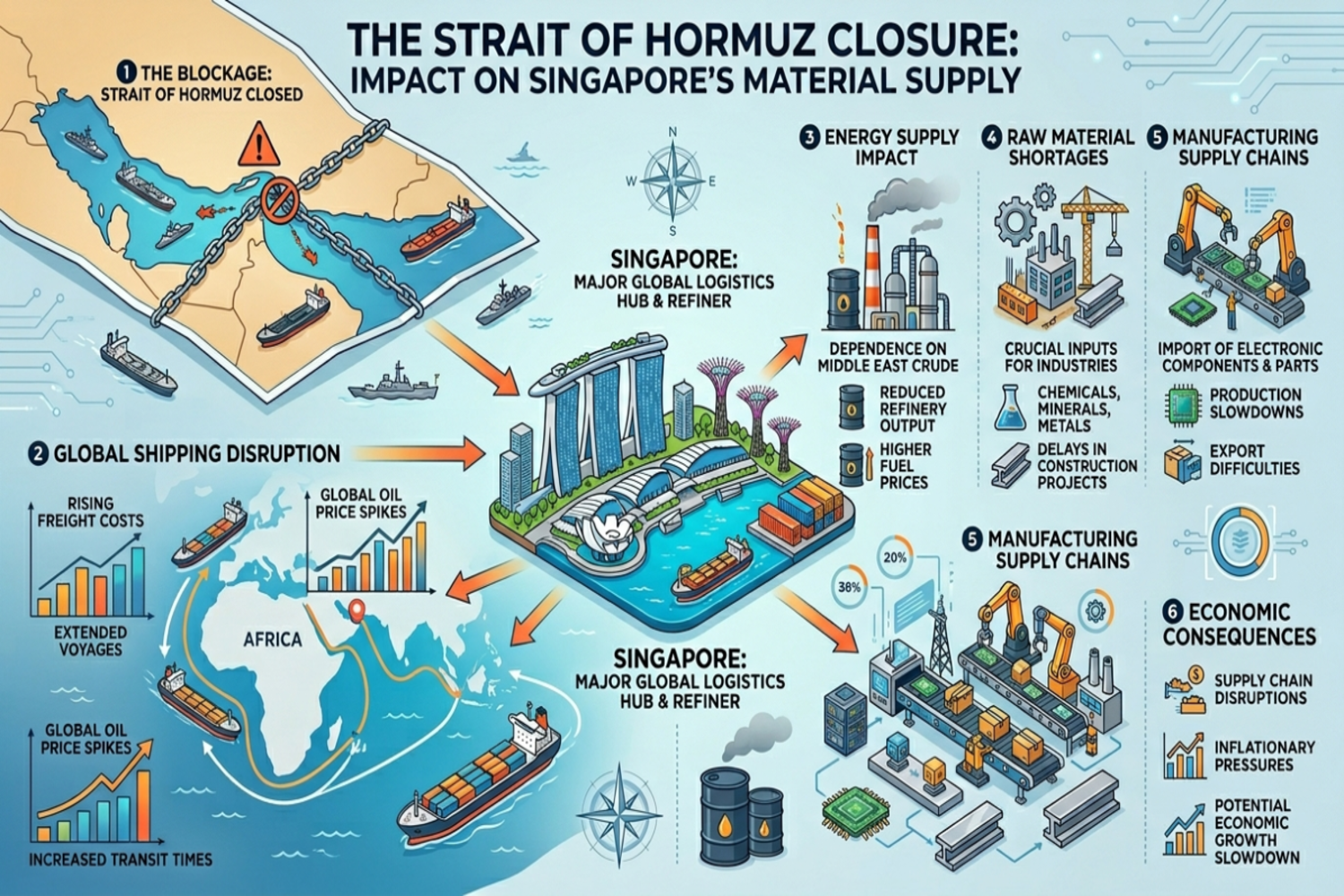
Was happily looking forward to key collection in Q2 2027 when this happened – The Strait of Hormuz, a maritime chokepoint between Iran and Oman, typically processes approximately 20% of global oil trade and substantial volumes of liquefied natural gas (LNG). Following military escalation that began February 28, 2026, maritime traffic through the strait has dropped by 90%, with daily vessel transits falling from an average of 130 to fewer than six vessels as of April 2, 2026.
Supply disruption timeline:
- February 28, 2026: Initial military escalation begins
- April 2, 2026: Strait traffic down 90% from normal levels
- Expected duration: Supply constraints forecast to persist 3–5 years even after conflict de-escalation
For Singapore, an island nation dependent on imported energy and construction materials, this bottleneck manifests immediately through commodity price shocks and extended shipping timelines. Container vessels are being diverted around the Cape of Good Hope, adding 10 to 14 days to voyage times and effectively removing 10% to 15% of global shipping capacity. This supply disruption directly impacts homeowners sourcing renovation materials imported to Singapore.
How Energy Prices Drive Construction Material Costs
The connection between crude oil prices and renovation budgets operates through several direct channels:
Petroleum-based materials:
Waterproofing membranes, sealants, and various paints are petroleum derivatives. With Brent crude surpassing $120 per barrel (up 69% from the February 2026 baseline of $71), contractors report immediate margin compression on these essential items.
Industrial metals:
The Middle East produces 9% of global primary aluminium. Supply constraints have pushed aluminium futures to over $3,300 per ton — a 50.6% increase from February levels. Regional premiums for physical aluminium delivery have risen 15% to 25%, affecting window frames, cladding, and metal fixtures directly impacting renovation scope and cost.
Shipping and logistics:
Extended shipping routes and higher bunker fuel costs are passed through to homeowners sourcing imported tiles, marble, or laminates. Lead times have extended from typical 6–8 weeks to 10–12 weeks for many imported materials.
Revised Renovation Budget Estimates for 2026 BTO Homeowners
| Flat Type | Basic Renovation | Moderate Renovation | Extensive/Premium |
|---|---|---|---|
| 3-Room BTO | $25,000 – $30,000 | $36,000 – $44,000 | $45,000+ |
| 4-Room BTO | $35,000 – $40,000 | $51,000 – $62,000 | $70,000+ |
| 5-Room BTO | $40,000 – $48,000 | $67,000 – $82,000 | $90,000+ |
What this means: A 4-room BTO renovation previously budgeted at $50,000 now realistically costs $61,000 or more. These estimates include a necessary 10%–20% contingency buffer to account for potential material shortages or additional price increases during the renovation period.
Material-Specific Impact and Lead Times for Pine Ville @ AMK Residents
For Pine Ville @ AMK homeowners expecting keys in Q2 2027, the flat size and renovation scope will determine total impact. A moderately renovated 4-room unit now requires:
Material delays and cost escalation:
- High-pressure laminates and plywood: Lead times extended from 4–6 weeks to 8–10 weeks. Prices up 15%–25% due to petroleum-based manufacturing inputs and freight costs.
- Tiles and marble: High-end imported marble faces shipping delays of up to 10 additional days due to rerouting around Africa. Granite and marble suppliers report lead times extending from 6–8 weeks, with prices up 15%–25%.
- Quartz countertops: Engineered quartz prices have increased $100–$200 per linear foot. Wait times extended from 4–6 weeks to 8–10 weeks.
- Electrical and plumbing fixtures: Copper and brass fittings show regional premium increases of 10%–15%. Premium imported fixtures face longer lead times and higher freight costs.
- Kitchen appliances: European and Japanese imports now require 10–12 delivery weeks versus previous 6 weeks, with price increases of 5%–10% due to freight cost escalation.
Electricity Tariff Increases and Contractor Operating Costs
SP Group announced electricity tariff changes in April 2026. The tariff increase of 29.72 cents per kWh (up 2.1%) directly impacts contractor operating costs during renovation:
SP Group electricity tariff changes:
- April–June 2026: 29.72 cents per kWh (up 2.1%)
- Impact on 4-room HDB: ~$1.96 per month
- H2 2026 forecast: Energy Market Authority warns of “sharper increases”
- Projected H2 2026 impact on 4-room HDB: ~$10–$12 per month
For homeowners planning renovations, rising electricity tariffs mean contractors’ operating costs will increase, potentially triggering mid-project cost adjustments. This adds urgency to finalizing renovation scope and securing material pricing early.
Macro Impact: Geopolitical Tension and Singapore Economy
Analyzing the 12-month trajectory of inflation, cost of living, and renovation challenges for new homeowners in the wake of Middle Eastern energy disruptions.
Oil Price Peak
SGD 150 to SGD 160
Projected Brent Crude Equivalent per Barrel
Core Inflation
3.9 to 4.2 Percent
Forecasted 12-Month Range
Reno Cost Hike
15 to 25 Percent
Estimated Material and Freight Surcharge
Energy and Inflation Correlation
As global energy supply chains tighten, Singapore faces immediate pressure on electricity tariffs and transport costs. Index base 100 used for comparison.
Household Expenditure Squeeze
Utility price hikes and food import costs are the primary drivers of increased cost of living for the next year.
The BTO Renovation Outlook
For those receiving keys in the next 12 months, the war impacts logistics and manufacturing energy costs, resulting in higher quotes across all trades.
Renovation Component Price Index
01
Raw Material Scarcity
Cement and glass manufacturing costs are rising due to high furnace fuel prices. Expect quotes for masonry and custom windows to rise by SGD 3,000 to SGD 5,500 per project.
02
Freight and Logistics
Shipping route diversions mean European tiles and designer fittings face delays of 8 to 12 weeks with surcharges around SGD 1,200 per shipment.
03
Interest Rate Persistence
With inflation rebounding, renovation loan rates are unlikely to drop. Budget for monthly repayments based on a 4.2 percent interest floor.
Supply Chain Risk vs Cost (WebGL)
Scatter analysis of common renovation items. Higher markers indicate higher cost increases, while markers further right indicate longer delays.
Data updated as of Q2 2026. Projections based on current geopolitical variables.
Practical Strategies for Navigating Elevated Costs
1. Budget with a 15% contingency buffer
Rather than budgeting to the quoted amount, establish a minimum 15% cash reserve above the quoted amount. For a 4-room renovation quoted at $55,000, this means holding approximately $8,250 in reserve.
2. Secure materials early to lock in prices
Contractors and suppliers advise finalizing material selections and requesting immediate stock procurement even if key collection is months away. This approach provides:
- Price certainty by avoiding exposure to further increases
- Supply security by reducing risk of material unavailability during renovation
- Infrastructure timeline oversight by ensuring contractor can order early and minimize procurement delays
3. Prioritize functional value over aesthetics
To manage costs, prioritize functional upgrades (kitchen, bathroom, electrical) over premium finishes. Upgrading from standard laminates to high-grade imported materials can add 20%–30% to total costs, whereas functional improvements deliver consistent value.
Key Takeaway for Pine Ville @ AMK Residents
The Iran conflict’s disruption of the Strait of Hormuz has created a 3–5 year supply constraint affecting global oil and LNG markets. For Singapore’s construction sector, this manifests as a 20% cost increase for renovation materials, extended shipping timelines, and higher contractor operating costs. Pine Ville @ AMK residents expecting keys in Q2 2027 should budget $61,000–$65,000 for a moderate 4-room renovation (up from $50,000–$55,000 in 2025), finalize material selections early, and maintain a 15% contingency buffer to account for potential further increases during the renovation period.
Disclaimer: This blog is maintained by a cat who likes fried rice and occasionally gets distracted by void deck pigeons mid-sentence. These distractions are logged as ‘field research interruptions’ rather than ‘inability to focus.’ Twenty years of void deck observation have provided unique insights into community transitions, though admittedly most of that time was spent napping. The fried rice thing is just a personal preference and completely irrelevant to SERS documentation.