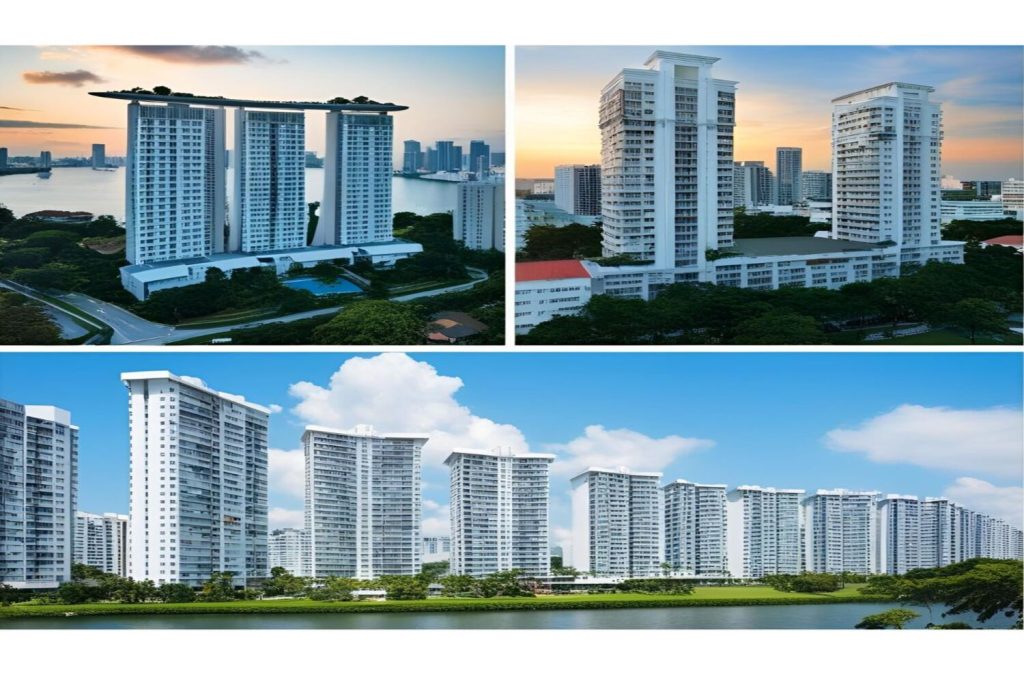
The Emergence of Million-Dollar HDB Flats
The first million-dollar HDB flat transaction occurred in July 2012, marking the beginning of what would become a growing trend in Singapore’s public housing market[1]. Initially rare, these transactions have grown substantially over the years, reflecting changing market dynamics and buyer preferences.
Year-by-Year Percentage Increases
Since the first million-dollar transaction in 2012, the trend has shown the following progression:
- 2012: 2 million-dollar HDB transactions (baseline year)
- 2013: 3 transactions, representing a 50% increase from 2012
- 2014: 2 transactions, representing a 33.3% decrease from 2013
- 2015: 12 transactions, representing a 500% increase from 2014
- 2016: 20 transactions, representing a 66.7% increase from 2015
- 2017: 46 transactions, representing a 130% increase from 2016
- 2018: 71 transactions, representing a 54.3% increase from 2017
- 2019: 64 transactions, representing a 9.9% decrease from 2018
- 2020: 82 transactions, representing a 28.1% increase from 2019
- 2021: 259 transactions, representing a 215.9% increase from 2020
- 2022: 369 transactions, representing a 42.5% increase from 2021
- 2023: 470 transactions, representing a 27.4% increase from 2022
- 2024: 1,035 transactions, representing a 120.2% increase from 2023[2][1]
This data reveals several notable patterns. First, there were two years of decline (2014 and 2019), but the overall trajectory has been strongly upward. Second, 2021 saw an extraordinary increase of 215.9%, marking a significant acceleration in this trend. Finally, 2024 represented another major surge, with the number more than doubling from the previous year.
Market Share and Significance
While million-dollar HDB flats initially represented a tiny fraction of the market, their share has grown substantially:
- 2012: 0.01% of total HDB resale transactions
- 2018: 0.33% of total transactions
- 2021: 0.89% of total transactions
- 2023: 1.82% of total transactions
- 2024: 3.71% of total transactions[2][1]
This demonstrates that what was once considered an anomaly is becoming increasingly common, though still representing a minority of overall transactions.
Key Drivers of the Million-Dollar HDB Phenomenon
Location Premium
Central locations command significant premiums. Areas like Kallang Whampoa, Central, Toa Payoh, Bukit Merah, and Queenstown have recorded the highest number of million-dollar transactions[3][1]. In June 2023, Kallang Whampoa recorded the most million-dollar transactions with 18 units changing hands, while 11 units each were sold in Geylang and Bukit Merah[3].
Flat Size and Type
Larger flats, particularly five-room flats and executive apartments, tend to achieve higher prices. The highest transacted price for a resale flat as of mid-2023 was $1.6 million for a five-room unit at Boon Tiong Road[3].
Buyer Demographics
A significant driver of million-dollar HDB transactions is the influx of former private property owners. After serving their 15-month wait-out period (imposed as a cooling measure), many former condominium owners are returning to the HDB market with substantial cash reserves[4]. High-income couples who may not want to stretch their budget to private property prices also find centrally located HDB flats over $1 million to be a viable option[4].
Supply Constraints
The limited supply of flats reaching their Minimum Occupation Period (MOP) has created scarcity in the market. The number of flats obtaining their five-year MOP is projected to fall for a third consecutive year from 30,920 units in 2022 to 6,974 units in 2025, representing the lowest MOP number since 2014[5]. This decrease in available units exerts upward pressure on resale prices.
Monthly Records and Notable Peaks
The million-dollar trend has shown interesting patterns even within shorter timeframes. In January 2024, Singapore’s property market saw an all-time high for million-dollar HDB flat transactions, with 74 sales recorded. This record was matched again in May 2024[6].
June 2023 saw a particularly significant spike, with 96 million-dollar HDB transactions, representing a 29.7% increase from the 74 units sold in May of that year[3].
Price per Square Foot Trends
The average price for million-dollar flats has increased significantly over time. From 2012 to 2023, the average price rose from $645 per square foot to $886 per square foot, marking an increase of 37.4%[7]. This reflects not just more flats crossing the million-dollar threshold, but also higher prices per unit area.
Broader Market Context
The rise in million-dollar HDB flats should be understood within the context of overall HDB resale price trends. Over the past 10 years, HDB resale prices have risen by 44.5%, and when extending the view to 20 years, prices have surged by 156.7%[8].
In 2023, HDB resale prices rose by 4.9%, which was a smaller increase compared to 10.4% in 2022 and 12.7% in 2021[8]. For 2024, the fourth quarter saw resale prices climb by 2.6%, with year-on-year prices rising by 9.7%[8].
Future Outlook
Looking ahead, analysts anticipate that million-dollar HDB transactions will continue to increase. Some market observers have predicted that we might even see the first $2 million HDB flat within the next few years[4].
For 2025, OrangeTee analysts anticipate HDB resale prices to rise 4 to 6 percent, assuming there are no additional property cooling measures or unforeseen macro conditions[5]. They expect resale prices to average around 1 to 1.5 percent growth per quarter.
Conclusion
Singapore’s million-dollar HDB phenomenon reflects a significant shift in the public housing market. From just two transactions in 2012 to over a thousand in 2024, the trend has shown remarkable growth. While still representing less than 4% of total transactions, the rapid percentage increases year over year indicate changing perceptions of HDB flats as potential high-value assets.
The sustained growth in million-dollar HDB transactions, particularly the dramatic increases in 2021 and 2024, suggests that this is not merely a passing trend but potentially a fundamental restructuring of how public housing is valued in Singapore’s property market. As the market continues to evolve, monitoring these high-value transactions will provide valuable insights into broader housing affordability and policy effectiveness.
⁂
- https://smartwealth.sg/million-dollar-hdb-flats/
- https://stackedhomes.com/editorial/the-rise-of-million-dollar-hdb-flats-in-singapore-is-this-going-to-be-the-new-norm/
- https://www.businesstimes.com.sg/property/number-million-dollar-hdb-flats-resold-hit-all-time-high-june-prices-1-8-srx-99-co
- https://www.linkedin.com/pulse/understanding-surge-million-dollar-hdb-flats-insights-alvin-chin-3dfkc
- https://www.businesstimes.com.sg/property/hdb-resale-prices-set-continue-growth-streak-2025-report
- https://www.99.co/singapore/insider/million-dollar-hdb-flat-transactions/
- https://www.edgeprop.sg/property-news/2-million-dollar-question-will-hdb-flat-ever-fetch-price
- https://smartwealth.sg/housing-cost-singapore-statistics/
Singapore’s Policy Response to Rising Million-Dollar HDB Flat Transactions
The Singapore government has adopted a multipronged strategy to address the growing prevalence of million-dollar Housing and Development Board (HDB) resale flats while maintaining housing affordability. These interventions focus on cooling demand, increasing supply, refining public housing models, and enhancing financial support mechanisms.
Demand-Side Cooling Measures
- Loan-to-Value (LTV) Ratio Reductions
In August 2024, the Monetary Authority of Singapore (MAS) reduced the LTV limit for HDB housing loans from 80% to 75%, requiring buyers to provide larger down payments[1][2]. This measure directly targets buyers’ purchasing power, particularly in the high-end resale segment. For a $1 million flat, the cash outlay increased from $50,000 to $75,000, disincentivizing speculative purchases[1].
- Wait-Out Period for Private Property Downgraders
A 15-month wait-out period imposed in September 2022 prevents private homeowners from purchasing non-subsidized HDB resale flats immediately after selling their private properties[3][4]. This policy reduced the proportion of private downgraders buying million-dollar flats from 34% in 2022 to 12% in late 2024[2][3]. Analysts note this has tempered demand for premium flats while allowing genuine upgraders to re-enter the public market[4].
- Stamp Duty Adjustments
- Additional Buyer’s Stamp Duty (ABSD): Rates for foreigners purchasing residential properties rose to 60% in 2023, while Singaporeans buying second properties now pay 20% ABSD, up from 17%[1][2].
- Seller’s Stamp Duty (SSD): Although not explicitly tightened recently, existing SSD frameworks impose taxes on properties sold within three years of purchase, discouraging short-term speculation[1].
Supply-Side Interventions
- Accelerated BTO Flat Construction
The government remains on track to deliver 100,000 Build-To-Order (BTO) flats between 2021 and 2025, marking a 35% increase compared to previous five-year periods[5][6]. This ramp-up aims to reduce reliance on the resale market, where million-dollar transactions predominantly occur. In 2025 alone, 19,600 BTO flats will be launched, with 25% allocated to two-room flexi units targeting lower-income households[7][4].
- Prime Location Public Housing (PLH) Model
Introduced in 2021, the PLH model imposes stricter conditions on flats in prime areas (e.g., city center, Queenstown):
- 10-year Minimum Occupation Period (MOP) instead of five years
- Subsidy clawbacks upon resale to prevent windfall gains
- Income ceilings for resale buyers[5][3]
While PLH flats have not yet entered the resale market, preliminary data shows no significant spillover effect on non-PLH flat prices in adjacent areas[5].
Affordability Safeguards
- Enhanced CPF Housing Grants
First-time buyers now receive up to $120,000 in Enhanced CPF Housing Grants (EHG), a 20% increase from pre-2024 levels[1][3]. For million-dollar flat purchasers, grants are capped at $80,000, ensuring targeted support for middle-income households[5].
- Income Ceilings and Progressive Policies
- PLH resale buyer income ceiling: $14,000 monthly, aligning with BTO eligibility thresholds[5]
- Mortgage Servicing Ratio (MSR) tightened to 30% of monthly income for HDB loans[1]
These policies ensure million-dollar transactions remain concentrated among higher-income households rather than distorting broader market affordability.
Market Monitoring and Future Measures
- Data-Driven Price Controls
The Ministry of National Development (MND) monitors resale transactions through a centralized analytics platform tracking:
- Price-per-square-foot trends
- Buyer demographics (e.g., private downgraders vs first-timers)
- Geographic clustering of high-value flats[5][8]
While resisting direct price caps, MND uses this data to calibrate cooling measures. For instance, the 2024 LTV adjustment followed a 29.7% quarterly spike in central area resale prices[6][4].
- Contingency Planning
Minister Desmond Lee has stated the government remains “not averse” to further interventions if needed, with options including:
- Expanding SSD coverage periods
- Tiered ABSD rates based on flat value
- Tighter income ceilings for premium flat purchases[2][4]
Addressing Secondary Effects
- Silver Housing Bonus Expansion
Effective December 2025, seniors downsizing from private properties (valued up to $1.5 million) can receive $20,000–$40,000 bonuses when purchasing smaller HDB flats[7]. This incentivizes freeing up larger flats for younger families while mitigating upward pressure on three-room resale prices.
- HDB Renovation Controls
Stricter guidelines now limit “luxury” renovations (e.g., smart home systems, premium flooring) in resale flats to prevent artificial value inflation. Violators face $5,000 fines and mandatory restoration costs[8].
Outcomes and Challenges
Success Metrics:
- Million-dollar transactions as % of total resale deals: Fell from 1.82% in 2023 to 1.2% in Q1 2025[8][9]
- First-time BTO application rates: Dropped from 3.7 applicants per flat (2019) to 2.1 (2024)[3]
Persistent Issues:
- Two-room resale prices rose 4% in 2024 despite cooling measures[3]
- Lease decay concerns: 23% of million-dollar flats are over 30 years old, risking long-term value erosion[8]
Conclusion
Singapore’s approach balances market liberalization with socialist housing principles. While million-dollar transactions persist due to location premiums and inflation, systemic interventions have prevented a full-scale affordability crisis. The phased introduction of PLH flats and sustained BTO expansion will likely further moderate price growth. However, addressing wealth inequality embedded in public housing remains an unresolved challenge, requiring nuanced solutions beyond blunt price controls[5][3][9].
⁂
- https://www.dbs.com.sg/personal/articles/nav/my-home/cooling-measures-in-singapore
- https://www.businesstimes.com.sg/property/singapore-government-not-averse-more-property-cooling-measures-if-necessary-desmond-lee
- https://www.theonlinecitizen.com/2025/01/18/affordability-or-curbing-million-dollar-flats-which-is-singapores-bigger-housing-challenge/
- https://www.semanticscholar.org/paper/8ccd2e4f2a49c58d376c4c50d8374276e302bbd9
- https://www.mnd.gov.sg/newsroom/speeches/view/written-answer-by-ministry-of-national-development-on-addressing-record-resale-flat-prices
- https://www.businesstimes.com.sg/property/hdb-resale-prices-set-continue-growth-streak-2025-report
- https://www.businesstimes.com.sg/property/silver-housing-bonus-scheme-extended-more-private-property-owners-who-downsize
- https://www.propnex.com/picks-details/890/million-dollar-hdb-flats-the-new-norm
- https://smartwealth.sg/million-dollar-hdb-flats/