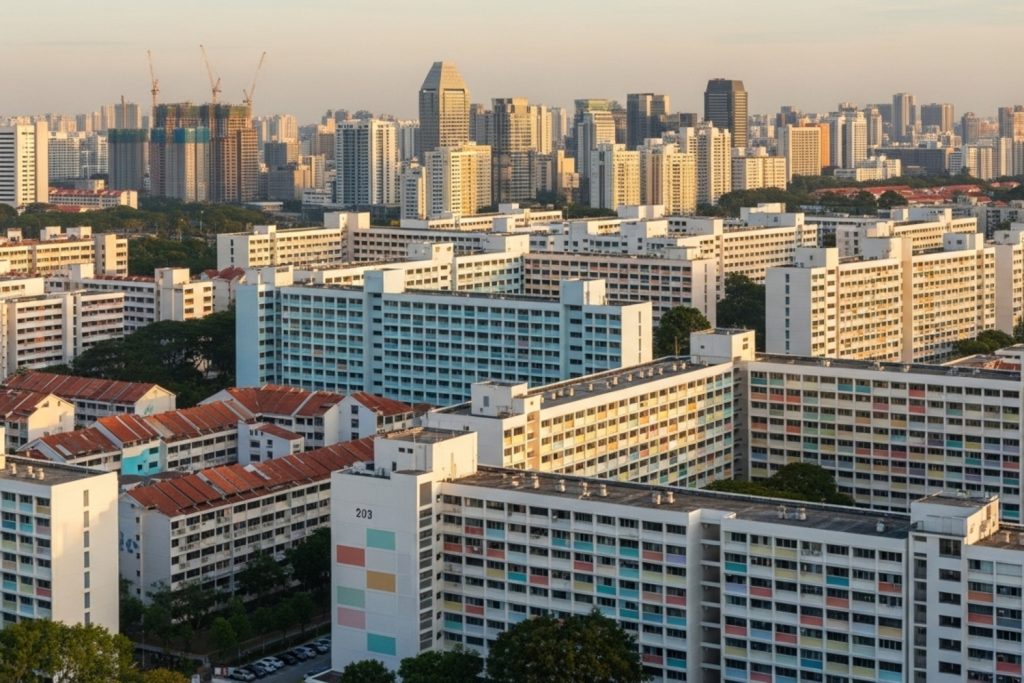
The Perfect Storm: How Population Growth, VERS, and BTO Supply Will Reshape Singapore's HDB Market
Singapore’s public housing landscape is entering a transformative period. With the population reaching 6.11 million as of June 2025 and continuing to grow, coupled with the upcoming Voluntary Early Redevelopment Scheme (VERS) and aggressive BTO construction across the island, homeowners are rightfully questioning: What does this mean for my HDB flat’s value?
The Growing Demand: Singapore’s Population Surge
The numbers tell a compelling story. Singapore’s total population has grown to 6.11 million in June 2025, representing a 1.2% increase from the previous year. The citizen and permanent resident populations combined now stand at approximately 4.2 million, with citizens increasing by 0.7% and PRs by 1.2% year-on-year. This steady demographic expansion creates fundamental housing demand that isn’t going away anytime soon.
More people inevitably means more competition for housing, particularly in the resale market where buyers have immediate access to homes compared to the 3-4 year wait for BTOs.
🏢 Singapore HDB Market: The Perfect Storm
How Population Growth, VERS & BTO Supply Are Reshaping Public Housing
Population Growth
VERS Impact (Early 2030s)
BTO Supply Surge
Million Dollar Question: Pine Ville @ AMK
Key Takeaway
The HDB market is becoming more differentiated. Location, lease status, and estate renewal potential now matter more than ever. While fundamentals support long-term value, expectations must be tempered by increased BTO supply and market realities.
VERS: The Game-Changer for Older Flats
The Voluntary Early Redevelopment Scheme, set to roll out in the early 2030s, represents a paradigm shift in how Singapore manages aging HDB estates. Unlike the highly selective SERS (Selective En bloc Redevelopment Scheme), VERS will apply to flats that reach approximately 70 years of age, giving residents a collective vote on whether to proceed with redevelopment.
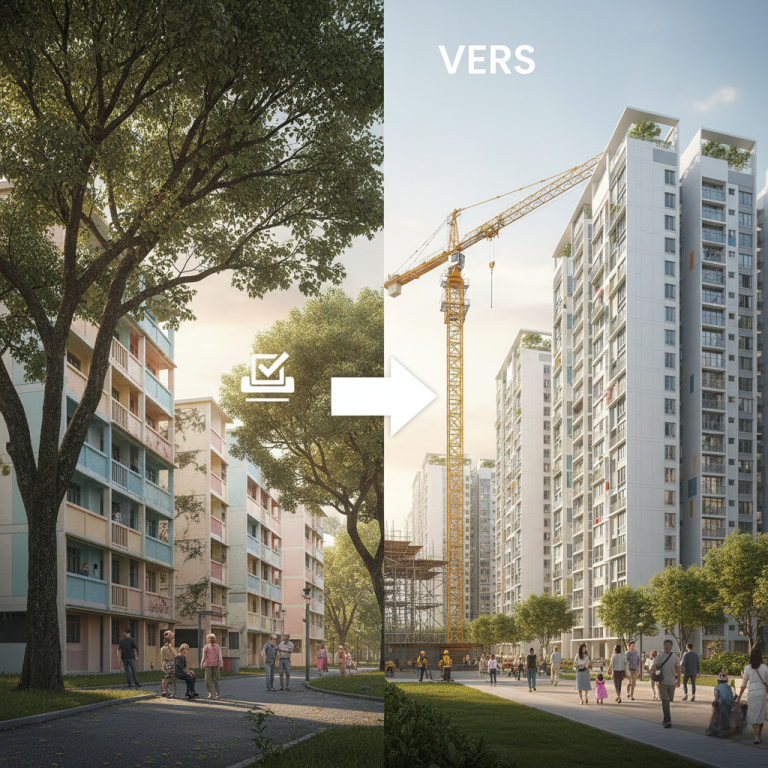
What This Means for Flats with 50+ Years Remaining Lease:
Flats with at least 50 years of remaining lease are actually in a strong position. Here’s why:
- The Sweet Spot: These flats are young enough to retain strong financing options (banks typically provide full loans for flats with 60+ years remaining, and reduced loans for those with 30-60 years), yet old enough that VERS becomes a realistic possibility in 20-30 years.
- VERS Premium: The mere possibility of VERS selection could create a valuation premium. Just as SERS flats command attention in the market, the potential for early redevelopment under VERS adds optionality value to older estates in strategic locations.
- Location Still Matters: Not all flats with 50+ years lease are equal. Those in mature estates with excellent connectivity, amenities, and redevelopment potential will increasingly command premiums as VERS implementation approaches.
- The Upgrading Factor: Many of these older flats have already undergone Home Improvement Programme (HIP) or Lift Upgrading Programme (LUP), making them functionally comparable to newer flats while carrying potentially lower prices.
The Flip Side:
However, flats in less strategic locations or poorly maintained estates may see value stagnation. VERS isn’t guaranteed for every old flat—it depends on redevelopment potential, land value, and the 80% resident vote threshold. The uncertainty could weigh on values in estates perceived as less likely to benefit from renewal schemes.
The BTO Boom: Impact on Recently Completed Flats
The government’s aggressive BTO launches—with record numbers like the 8,573 flats launched in October 2024—create a complex dynamic for recently completed BTOs that have just reached Minimum Occupation Period (MOP) with 85-90 years remaining lease.
Challenges for Recent MOP Flats:
- Supply Competition: The constant stream of new BTOs, particularly in mature estates and with enhanced features, creates direct competition for newly minted MOP flats. Why buy a 5-year-old resale flat when you can ballot for a brand new one at subsidized prices, even if you have to wait?
- The Pricing Gap: BTO prices remain heavily subsidized. While resale prices have climbed, the gap between new BTO prices and resale prices remains substantial. This caps the upside for sellers of young resale flats.
- Deferred Sales Pressure: With more BTOs being launched, some potential sellers of young resale flats may choose to wait longer before selling, hoping that demand catches up as BTO supply eventually normalizes.
Advantages for Recent MOP Flats:
- Immediate Gratification: For buyers who cannot wait 3-4 years, young resale flats offer immediate housing solutions. With growing population and family formation, this segment always finds buyers.
- Maximum Lease Value: With 85-90 years remaining, these flats face minimal lease decay concerns and qualify for full CPF usage and bank financing, unlike much older flats.
- Established Facilities: Unlike new BTOs where amenities are still developing, these estates have mature infrastructure, schools, and commercial facilities already in place.
- Quality Assessment: Buyers can physically inspect units and assess neighborhood dynamics, reducing the uncertainty inherent in ballot applications.
Case Study: Pine Ville @ AMK—Will 4-Rooms Hit $1 Million?
Pine Ville @ AMK, a SERS replacement project in Ang Mo Kio, offers a fascinating lens to examine future resale potential. To assess whether a 4-room flat here could cross the million-dollar threshold, we need to consider several factors:

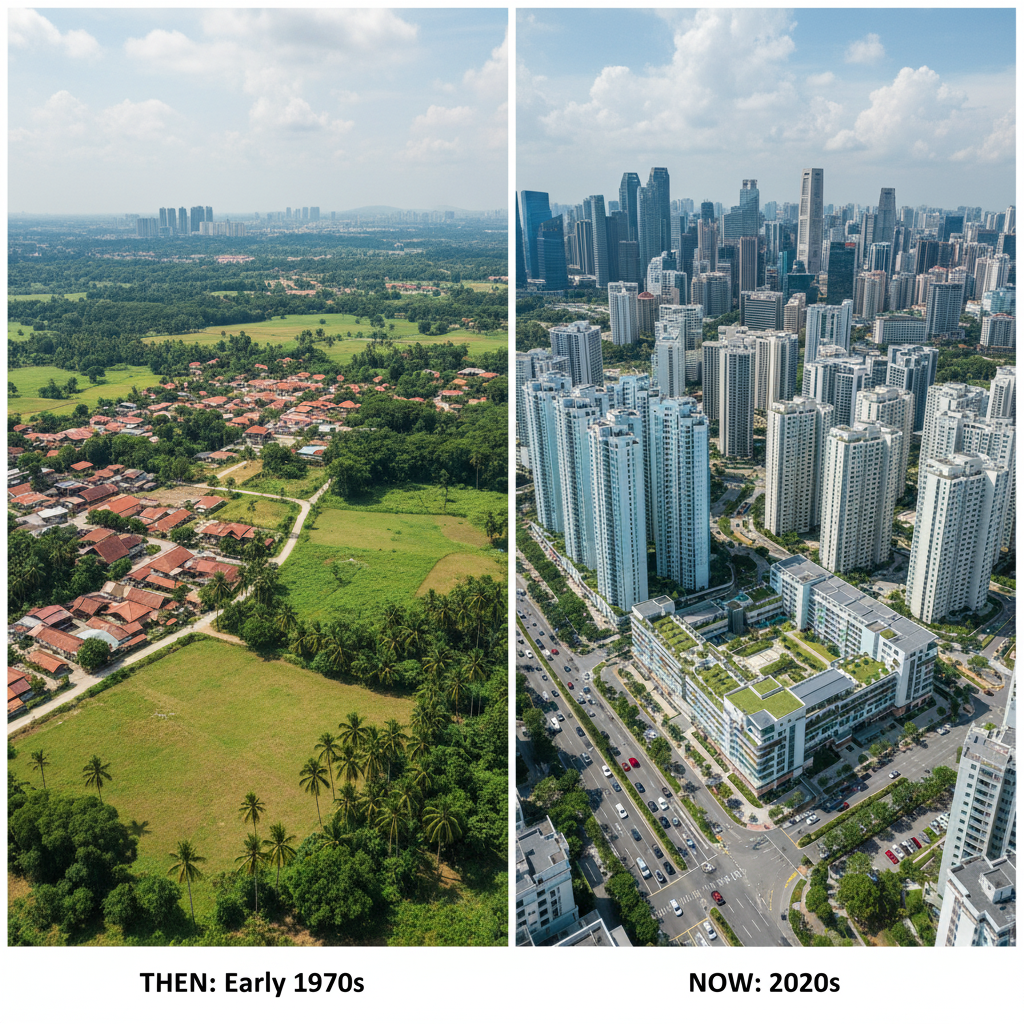
Factors Supporting Million-Dollar Potential:
- Mature Estate Premium: Ang Mo Kio is a highly mature estate with comprehensive amenities, schools, and transport connectivity. The upcoming Thomson-East Coast Line enhancement will only improve accessibility.
- SERS Heritage: As a SERS replacement project, Pine Ville flats come with larger floor areas and superior layouts compared to standard BTOs. The perception of “premium” status adds intangible value.
- Benchmark Transactions: Recent transactions in Ang Mo Kio have shown strong demand, with 5-room flats at Park Central @ AMK reaching $1.5 million in May 2025. This demonstrates that the area can support premium pricing.
- Scarcity Factor: SERS projects are finite and limited in supply. Once sold, they become rare commodities, which historically drives prices upward.
- Population-Driven Demand: With population growth and limited land, demand for well-located mature estate flats will intensify over time.
Factors Creating Headwinds:
- BTO Competition: The October 2024 launch of Central Trio @ AMK, a Plus-classified BTO in the same neighborhood, provides direct competition with subsidized pricing. Buyers might question paying resale premiums when new flats are available.
- 4-Room Size Challenge: Million-dollar HDB flats historically have been larger 5-room or executive units in prime locations. While 4-room flats in central areas have breached $1 million, Ang Mo Kio, despite being mature, isn’t considered “premium” like Queenstown or Tanjong Pagar.
- Subsidy Clawback: If Pine Ville flats are subject to resale restrictions or subsidy recovery (common in SERS projects), this could dampen price appreciation in the early years.
- Economic Cycles: Property markets are cyclical. Reaching $1 million requires not just location and fundamentals, but also timing the market upswing.
The Verdict:
A 4-room flat at Pine Ville @ AMK crossing $1 million is possible but not guaranteed. It would likely require:
- A time horizon of 10-15 years post-completion
- Continued population growth and housing demand
- Economic conditions supporting premium pricing
- The specific unit having superior attributes (high floor, good orientation, corner unit)
- General market price appreciation in the overall HDB segment
More realistically, 4-room units might reach the $850,000-$950,000 range within 10 years, with only exceptional units breaching the million-dollar mark. The 5-room units at Pine Ville, however, have stronger odds of crossing $1 million given precedents in the estate.
Strategic Implications for Homeowners and Buyers
For Owners of 50+ Year Lease Flats:
- Don’t panic about lease decay immediately. Your flat’s value proposition includes location, amenities, and the potential VERS upside.
- Maintain your property well. HIP and LUP participation enhances both livability and resale value.
- Monitor VERS implementation closely as the 2030s approach. Estates selected early could see speculation-driven price bumps.
- Consider location-based risk: flats in central, well-connected areas face less downside risk than those in peripheral estates.
For Owners of Recently MOP’ed Flats (85-90 Years Lease):
- Your competitive advantage is immediacy and certainty. Market to buyers who cannot wait or who have urgent housing needs.
- Price realistically relative to new BTO launches. Your flat is no longer “brand new” and must compete on value, not novelty.
- Highlight estate maturity and established infrastructure as key differentiators.
- Consider holding longer if market conditions are soft. Your lease remains strong for at least another decade.
For Prospective Buyers:
-
- Buying Older Flats (50+ Years): Calculate carefully. While VERS offers upside potential, ensure the price reflects the remaining lease and current utility value. Factor in restrictions on CPF usage and loan quantum for flats with under 60 years remaining.
- Buying Young Resale Flats (85-90 Years): You’re paying a premium for immediate possession. Ensure this premium is justified by your personal circumstances (cannot wait, urgent housing need, family planning). Don’t expect quick appreciation—these are medium to long-term holds.
- Balloting for BTOs: With increased supply and population growth, BTO remains the most subsidized entry into homeownership. However, be prepared for longer wait times and manage your housing needs in the interim.
The Bigger Picture: A Maturing Market
Singapore’s HDB market is maturing in both senses of the word. The oldest estates are literally aging and approaching lease milestones that trigger policy interventions like VERS. Simultaneously, the market itself is maturing, with greater sophistication among buyers and sellers about lease values, location premiums, and renewal prospects.
The interplay of population growth, VERS anticipation, and aggressive BTO supply creates winners and losers:
Winners:
- Older flats in prime locations with strong VERS potential
- New BTOs in mature estates with immediate amenities
- Young resale flats with superior locations or unique attributes
Losers (or at least slower gainers):
- Older flats in peripheral estates with weak renewal prospects
- Young resale flats with mediocre locations competing directly with new BTOs
- Flats with awkward remaining lease periods (20-40 years) facing financing and CPF restrictions
Navigating the New Reality
The confluence of population growth, VERS introduction, and sustained BTO construction is reshaping Singapore’s HDB landscape. Rather than creating a uniform impact, these forces will drive differentiation across the market.
Homeowners and buyers must become more discerning. The old mantra that “all HDB flats will appreciate” no longer holds uniformly. Location, lease status, estate renewal potential, and timing now matter more than ever.
For Pine Ville @ AMK and similar projects, the million-dollar question isn’t just about whether flats will reach that threshold—it’s about which specific units, in what timeframe, and under what market conditions. The fundamentals support long-term value retention and growth, but expectations must be tempered by competition from new supply and the realities of market cycles.
The best strategy? Understand your property’s unique position in this evolving landscape, make informed decisions based on fundamentals rather than speculation, and remember that for most Singaporeans, an HDB flat is first and foremost a home—not just an investment.
🎤 Final Meows
The Pine Ville Cat 🐱 Professional Void Deck Observer
Disclaimer: This analysis is based on current policy frameworks and market conditions as of October 2025, as observed from my favorite sunny spot in one of the AMK SERS blocks. Property markets are subject to government policy changes, economic conditions, and unforeseen factors—much like how my feeding schedule depends on whether my humans remember I exist or get distracted by property portals. While I’ve become quite the expert on HDB SERS matters between my 16-hour naps, I must insist that readers conduct their own due diligence and consult actual property professionals before making housing decisions. Unlike my opinions on the best napping spots in AMK (which are infallible), property advice requires proper human credentials. Meow responsibly.